Caring for a Nasogastric (NG) Tube at Home
Feeding through an NG tube is safe when a few rules are followed every time. Here's what good NG tube care looks like at home.
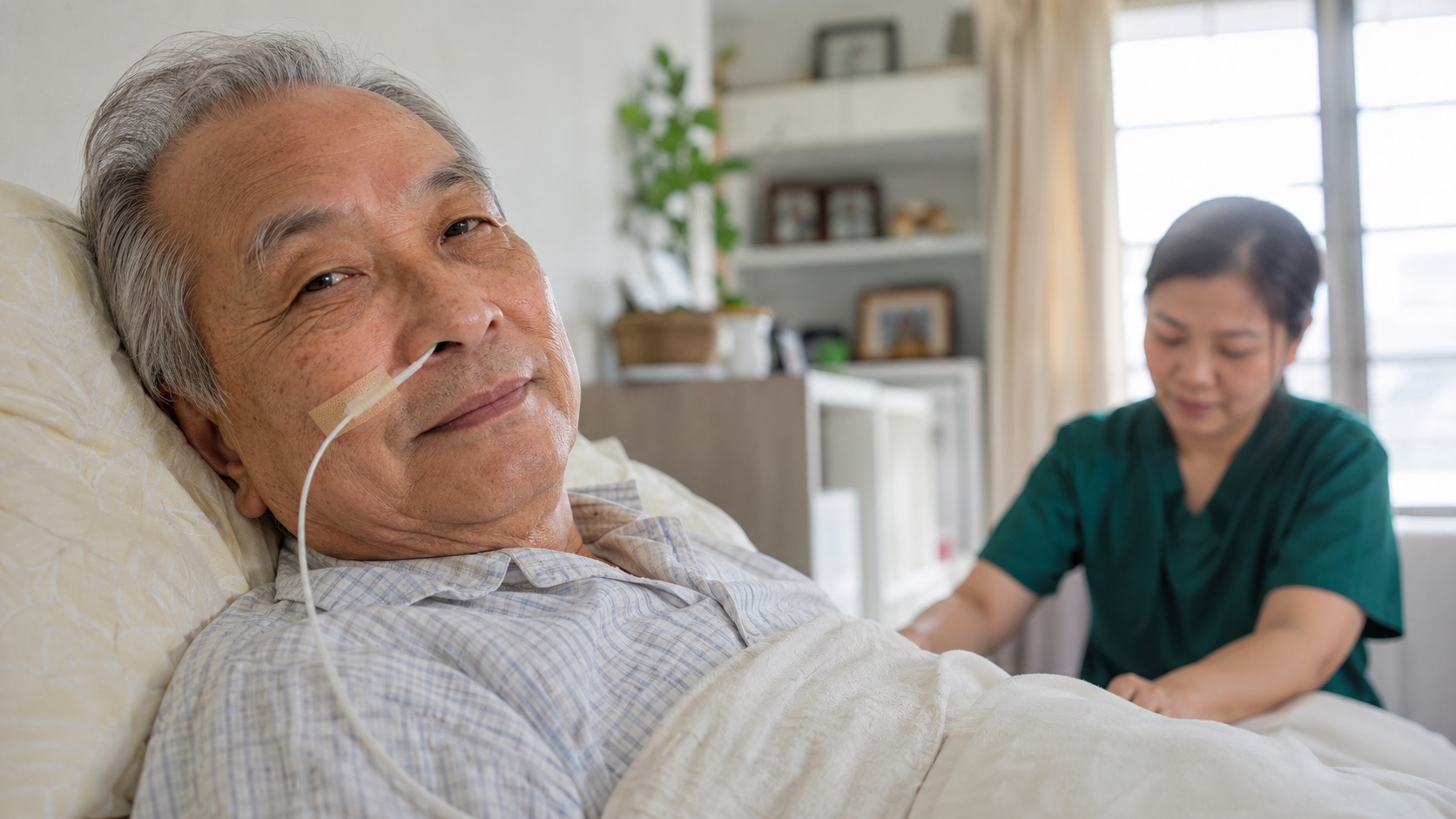
 homenurse.sg
General care information, not personal medical advice. Draft — pending clinical review.
What good care looks like
Good home nursing is more than completing a task. For NG tube care, it means a trained nurse who works cleanly and gently, checks how the patient is doing, keeps the family informed, and writes down what they found so the patient's doctor stays in the loop. The best sign of good care is that nothing is a surprise — the family knows what was done, what to watch for, and when the next visit is.
Position first, feed second
The single most important rule with an NG tube is confirming it's in the right place before anything goes down it. Good nurses check tube position following standard practice at each relevant point and teach the family how feeds are given safely — never rushing this step.
Secure, clean, comfortable
A well-secured tube that isn't tugging on the nose is more comfortable and less likely to be pulled out. Good care includes checking the skin where the tube is taped, keeping the mouth and nose clean, and repositioning the tape gently if it's irritating.
Giving feeds the right way
Feeds and medications given at the right rate, with the person sitting up, reduce the risk of reflux and aspiration. A nurse sets up the feeding plan clearly so the family can follow it confidently between visits.
When to call for help
- Coughing, choking, or breathing difficulty during or after a feed
- The tube comes out, or its position can't be confirmed
- Repeated vomiting
Need this done at home? NG tube change at home — from S$90 per visit.