Our clinical services
SNB-registered nurses perform these procedures in your home, with the price published up front and consumables at cost. Choose a procedure to see what's involved and what it costs.
 homenurse.sg
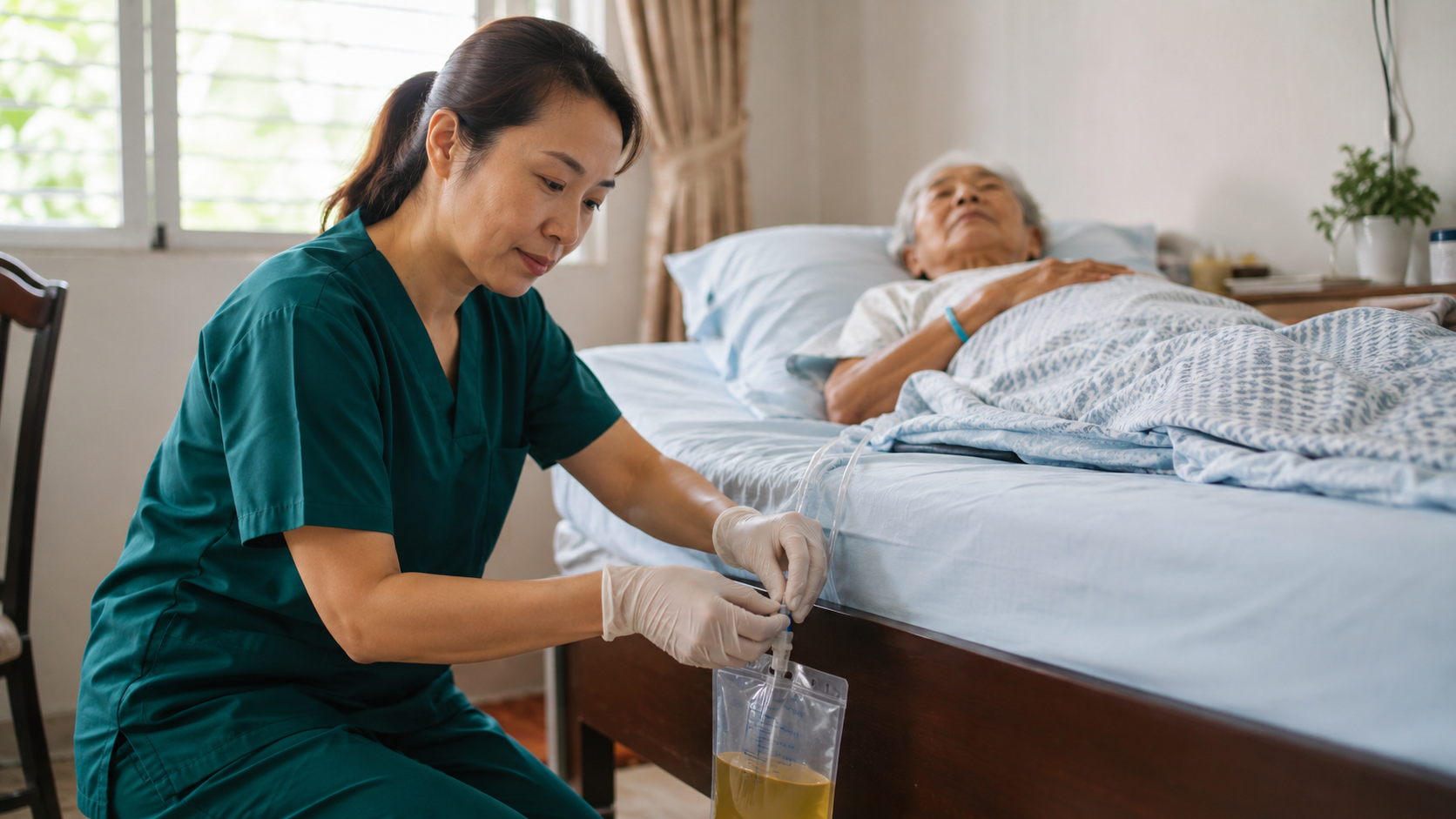
Urinary catheter change
People with a long-term indwelling urinary catheter (IDC) who need it replaced on a routine schedule, and those managing urinary retention at home after surgery or a hospital stay.
 homenurse.sg
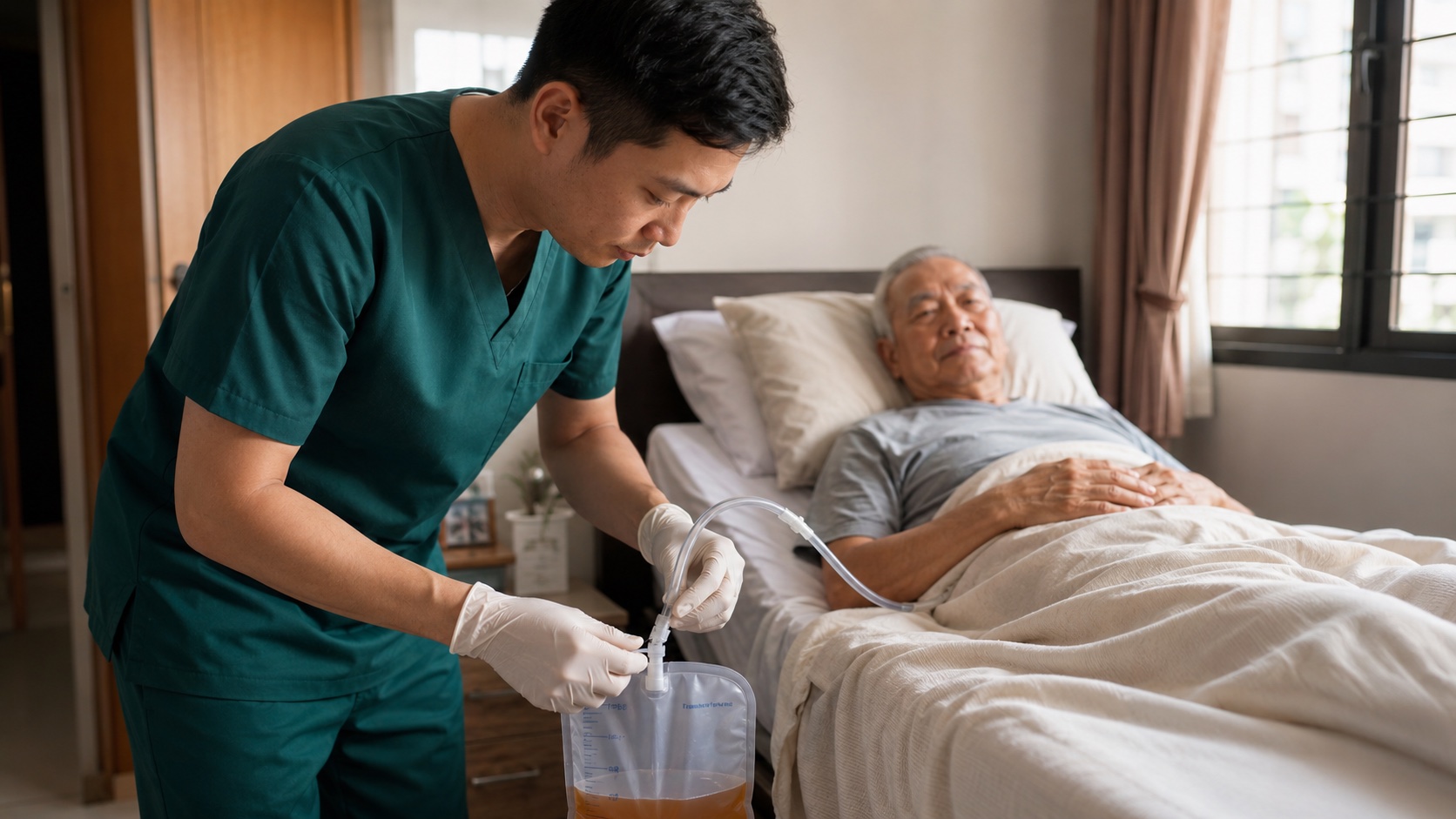
Male catheter change
Men with a long-term indwelling urinary catheter that needs routine replacement, including after prostate surgery or with urinary retention.
 homenurse.sg
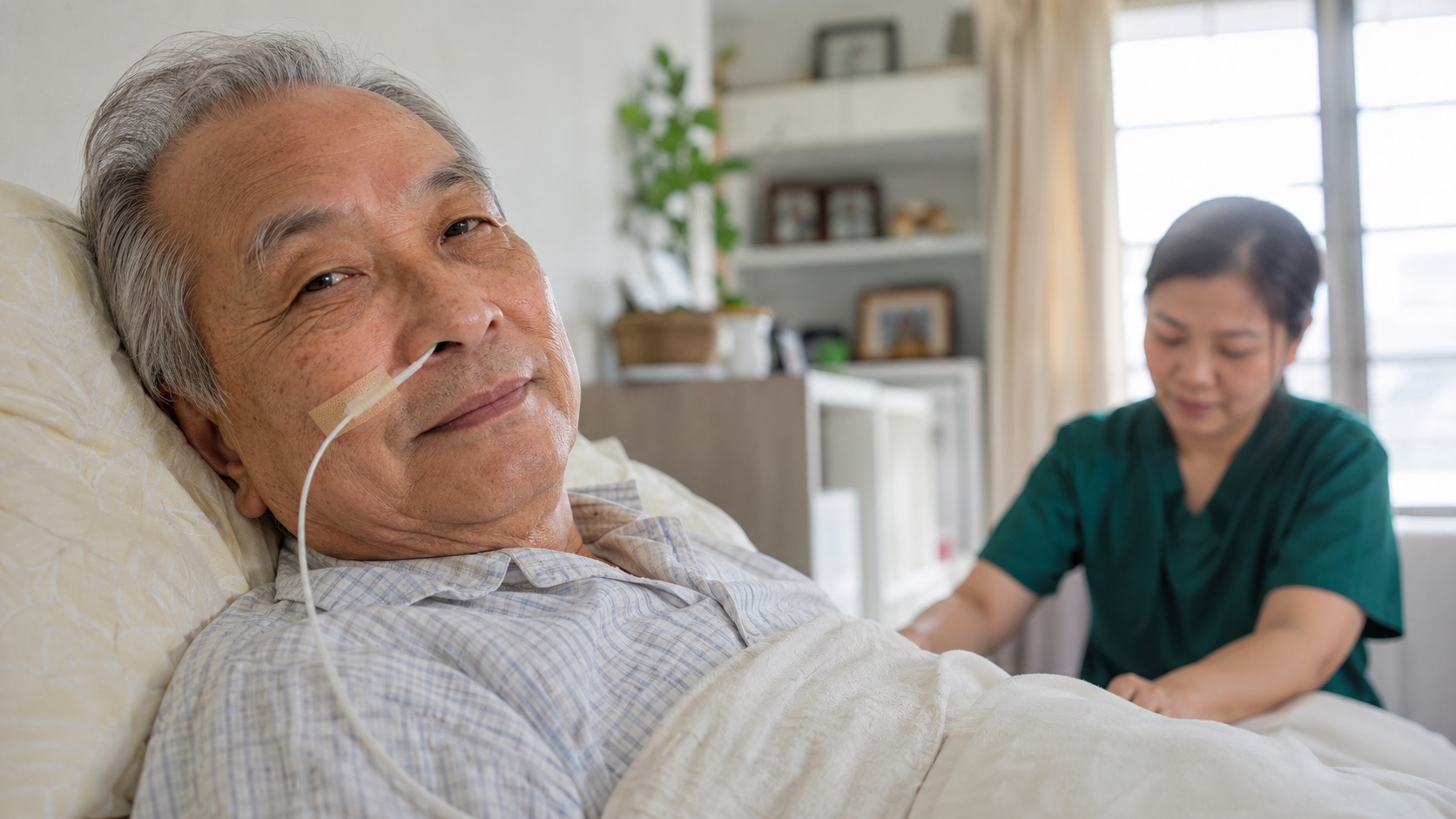
NG tube change
People who are fed through a nasogastric tube at home and need it replaced on schedule, often after a stroke or where swallowing is unsafe.
 homenurse.sg
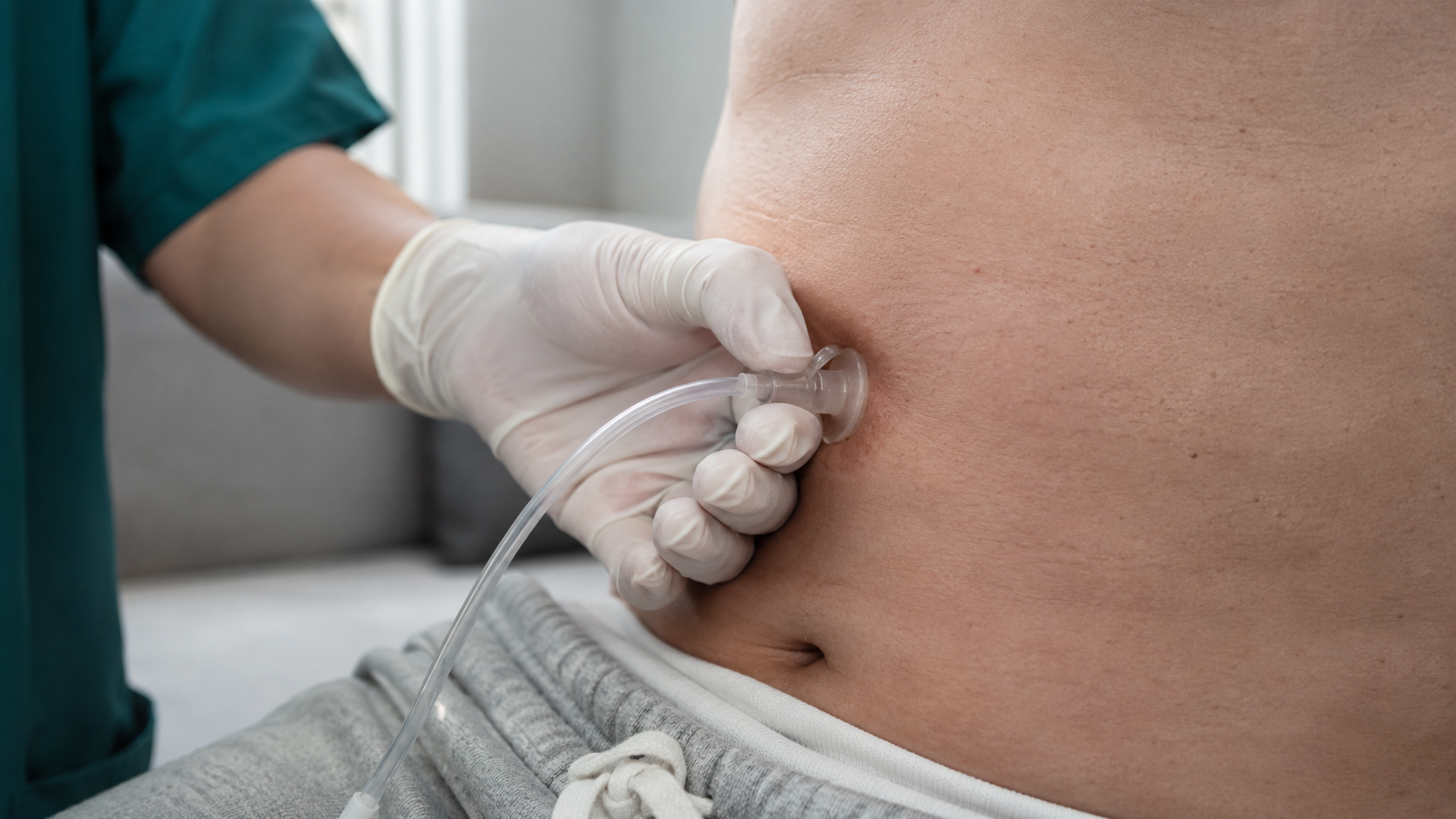
PEG tube change
People fed through a PEG (percutaneous endoscopic gastrostomy) or balloon-gastrostomy tube who need a routine replacement.
 homenurse.sg
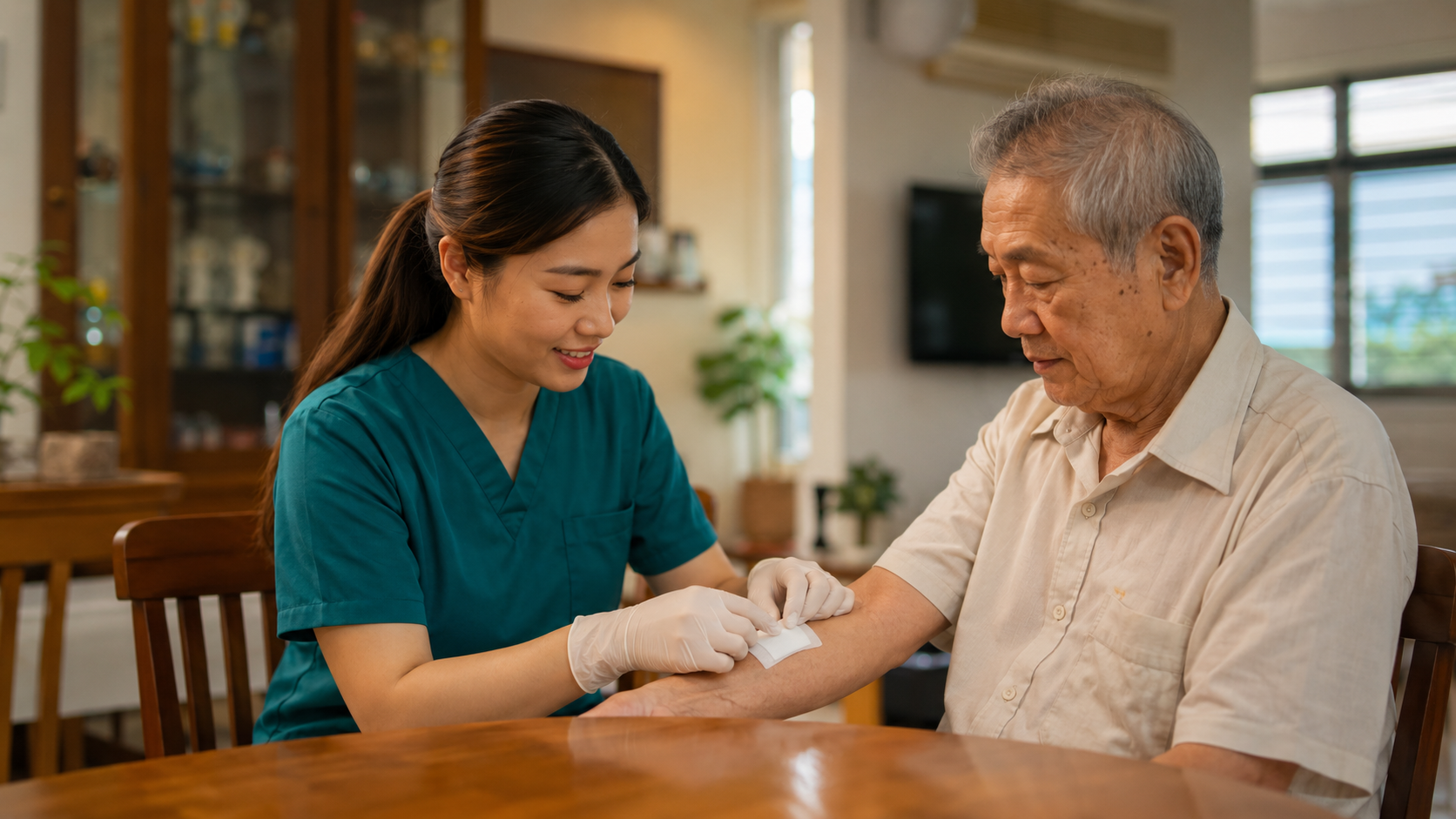
Wound dressing
People recovering from surgery, and those managing diabetic wounds, pressure sores (bedsores), or other wounds that need regular, skilled dressing changes.
 homenurse.sg
PICC line care
People discharged home with a PICC (peripherally inserted central catheter) — for example for a course of IV antibiotics or other IV treatment.
 homenurse.sg
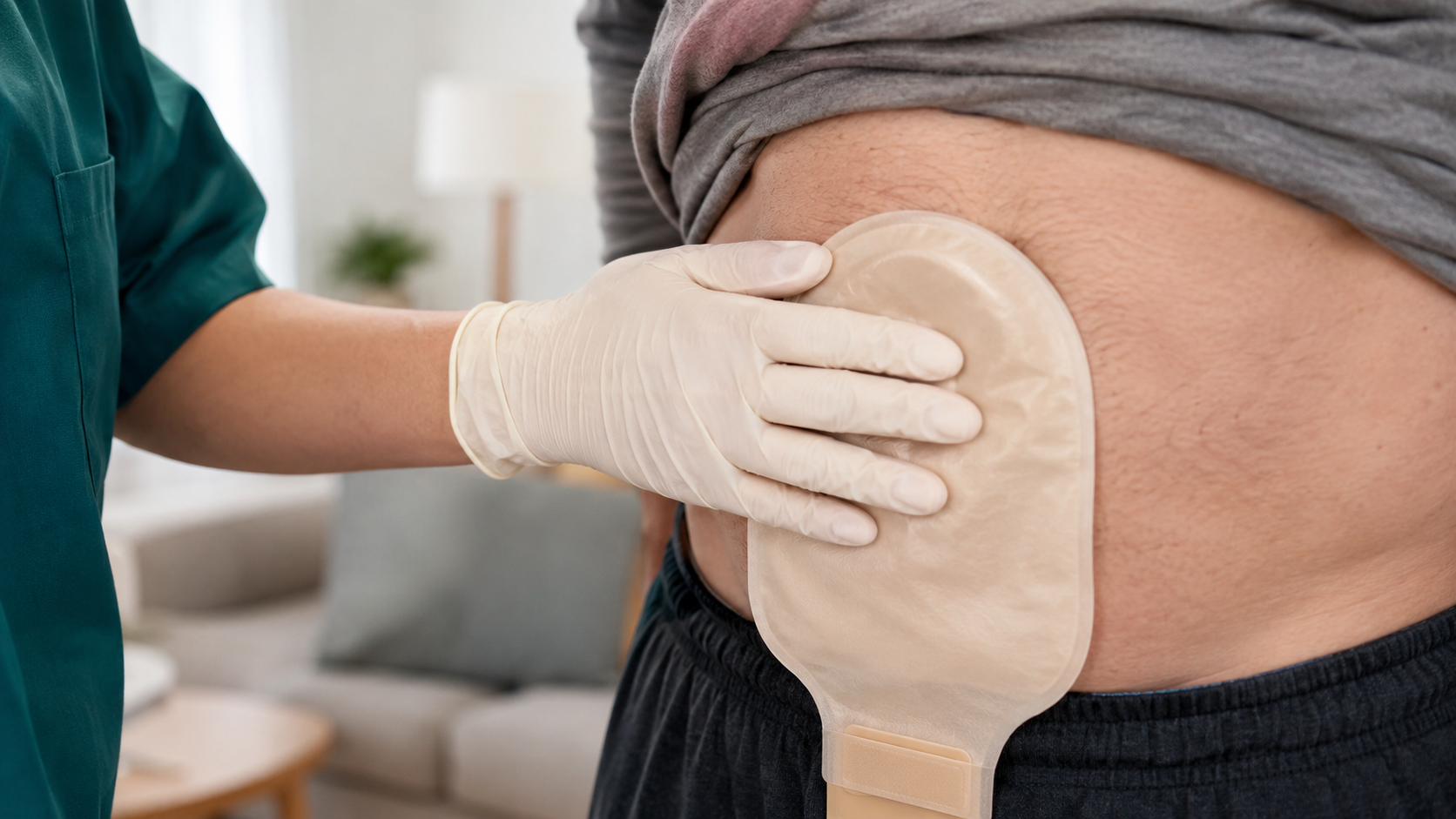
Stoma care
People with a colostomy, ileostomy, or urostomy — especially in the weeks after surgery while they and their family build confidence.
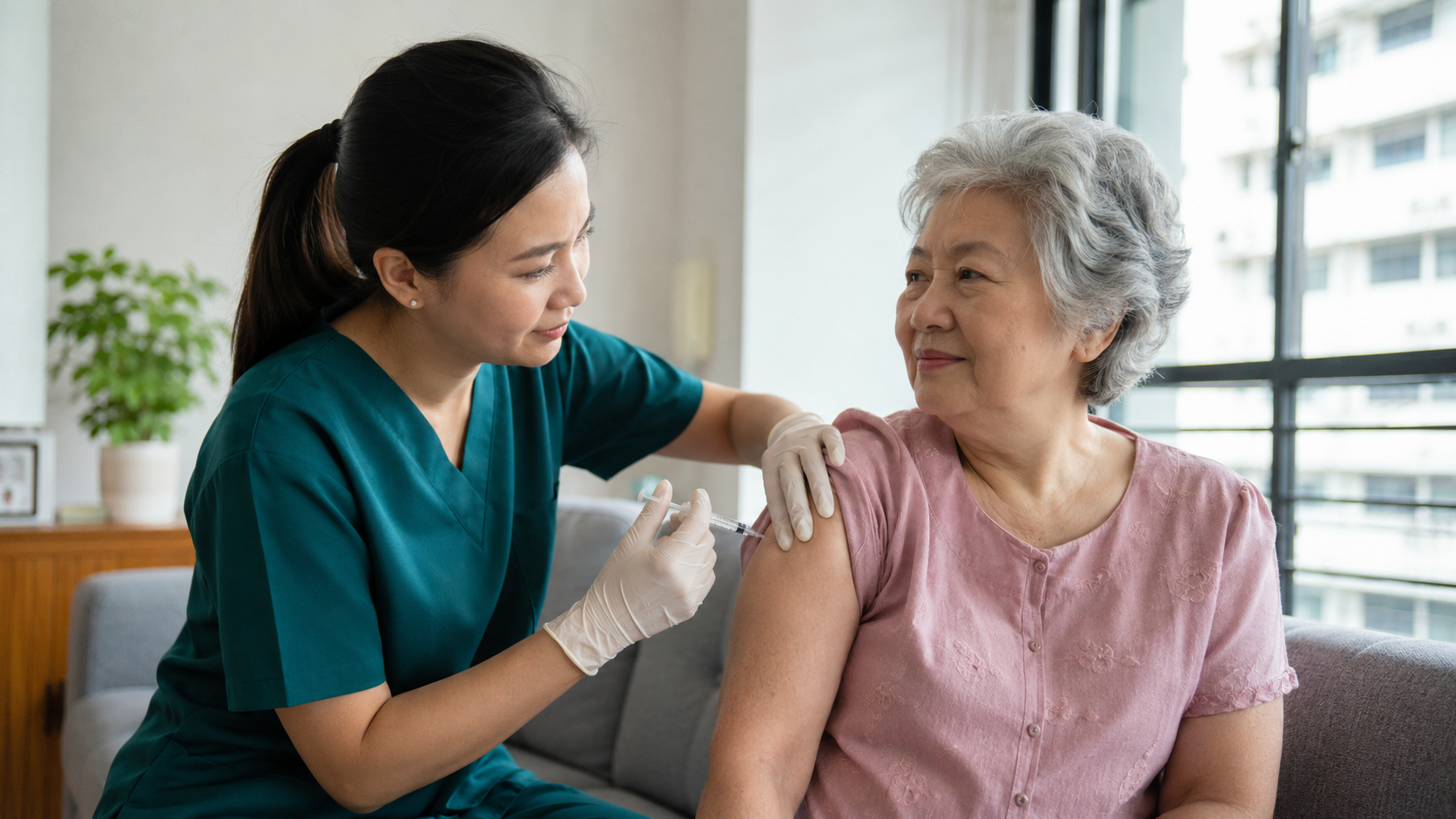
homenurse.sgInjections at home
People who need regular prescribed injections — for example intramuscular or subcutaneous medications — that they or their family aren't able to give themselves.
 homenurse.sg
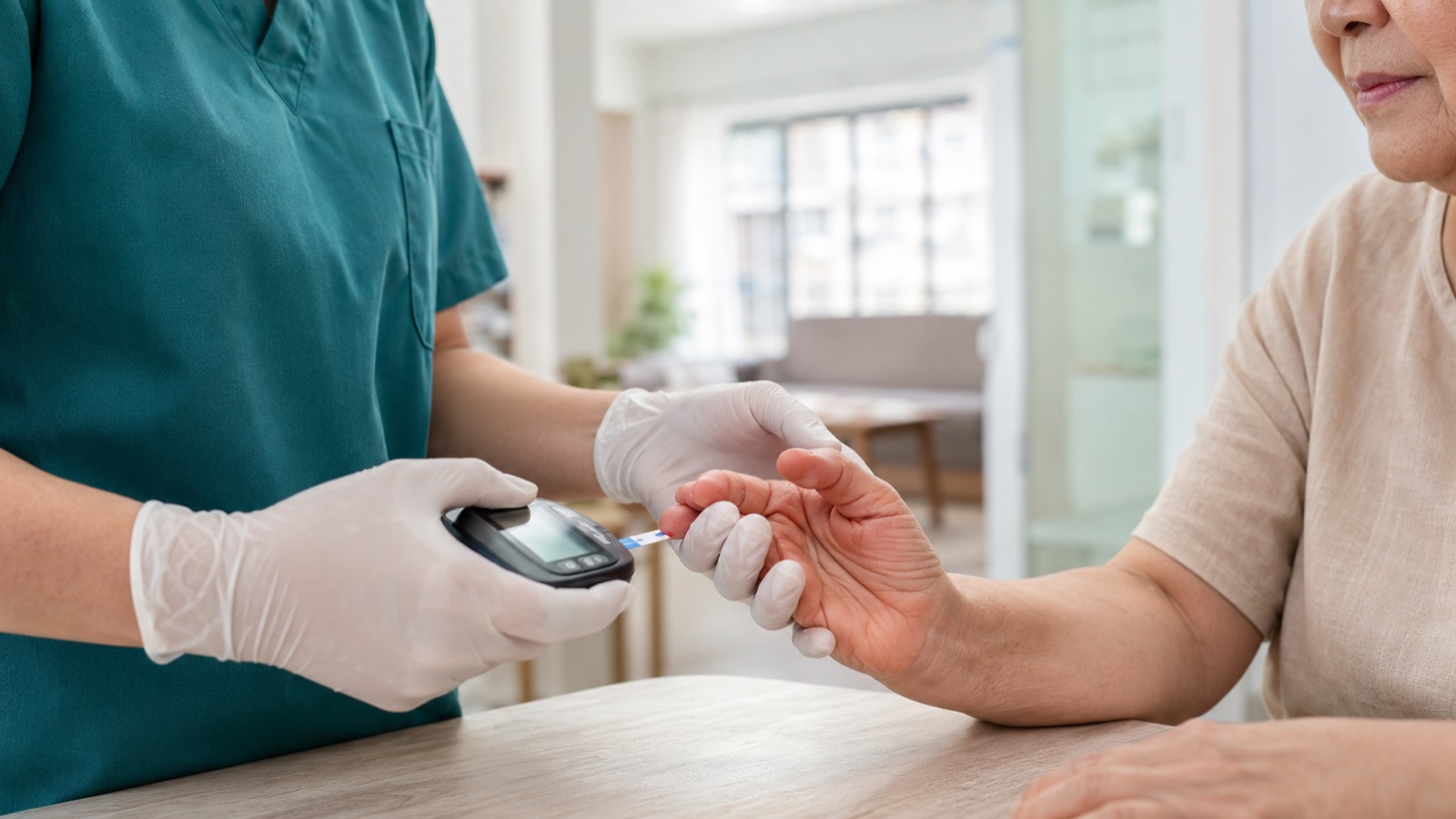
Diabetes care
People with diabetes who need help with insulin injections or blood glucose monitoring at home — often after a new diagnosis, a change in insulin, or when eyesight or dexterity makes self-injection unsafe.
 homenurse.sg
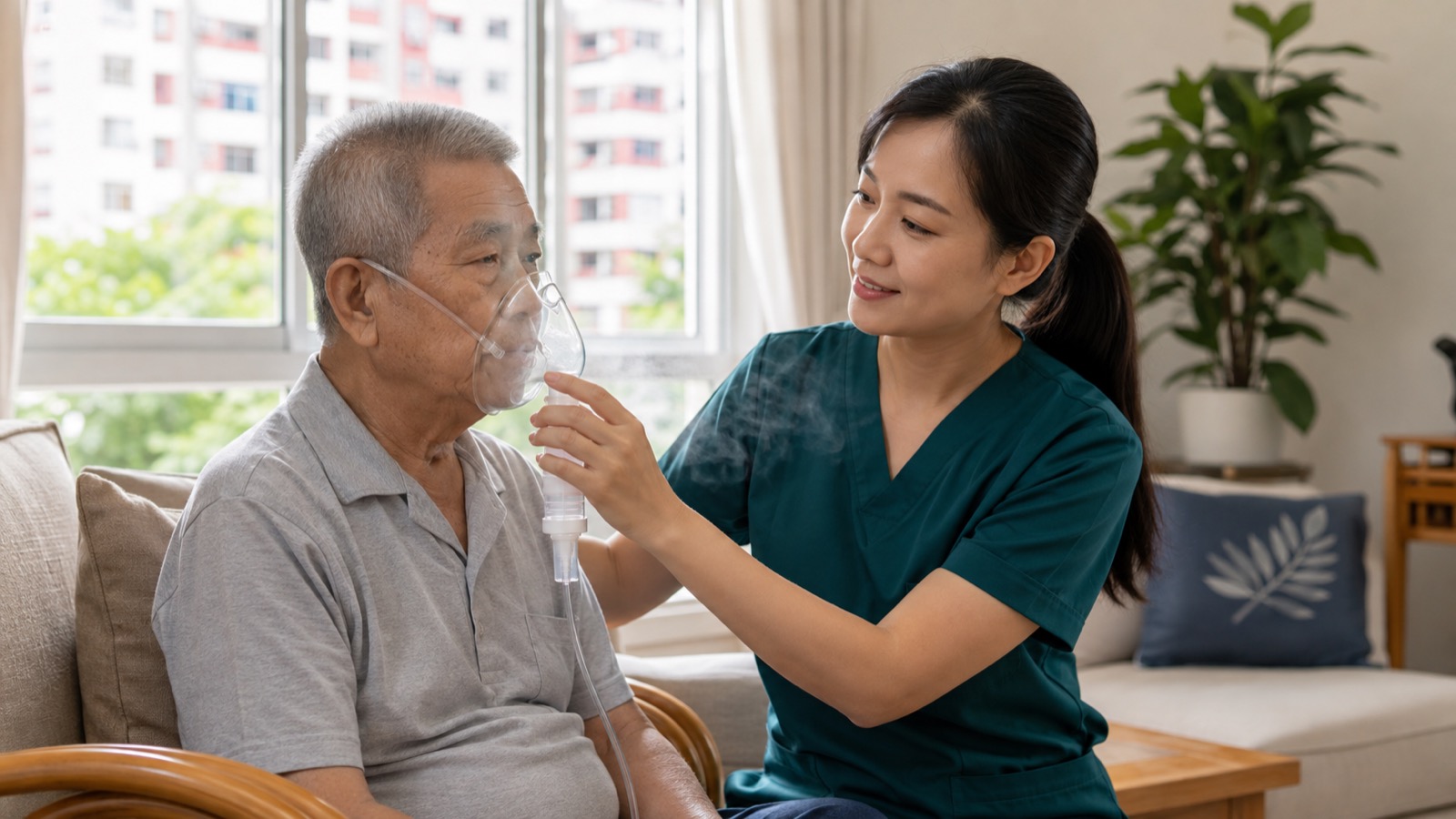
Nebuliser therapy
People with asthma, COPD or other breathing problems who need inhaled medication through a nebuliser and can't manage it alone — often the frail elderly or those recovering after a chest infection.
 homenurse.sg
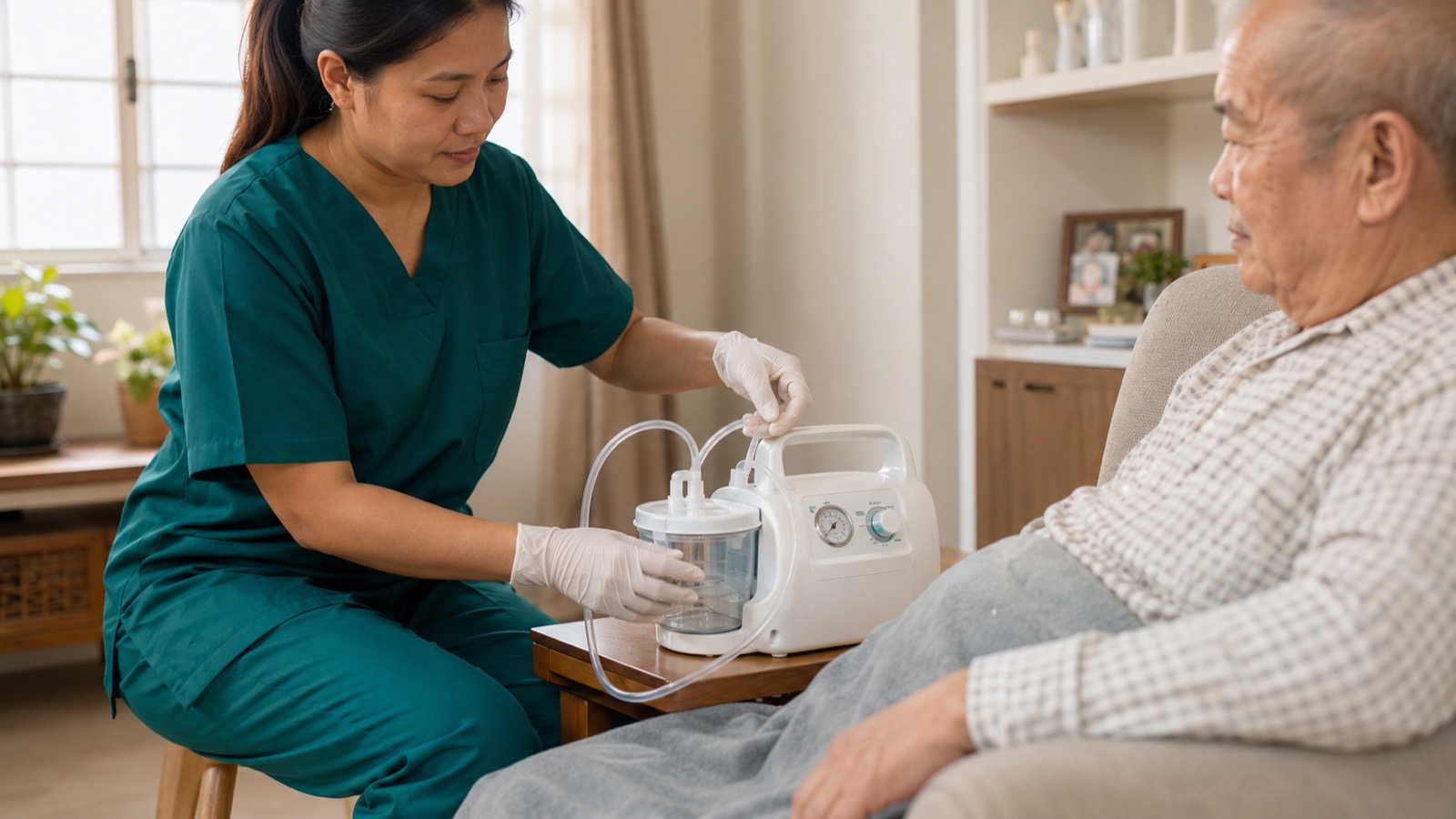
Oral suctioning
People who can't clear their own secretions — for example after a stroke, with advanced neurological illness, or when bedridden — and the families learning to manage suctioning safely at home.
 homenurse.sg
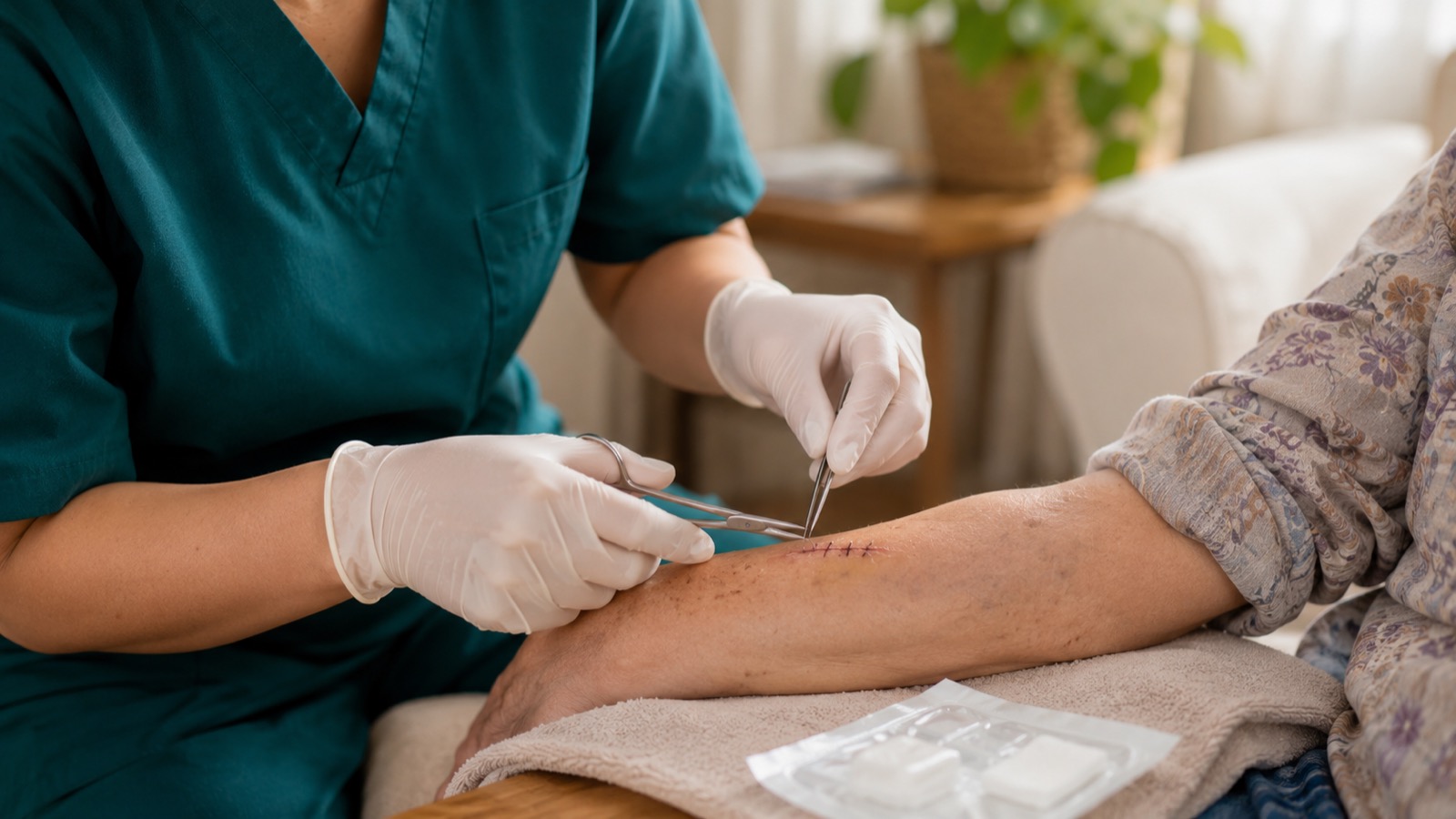
Stitch & staple removal
People recovering from surgery or a repaired wound whose stitches or staples are due to come out, and who would rather not travel back to a clinic to have it done.
 homenurse.sg
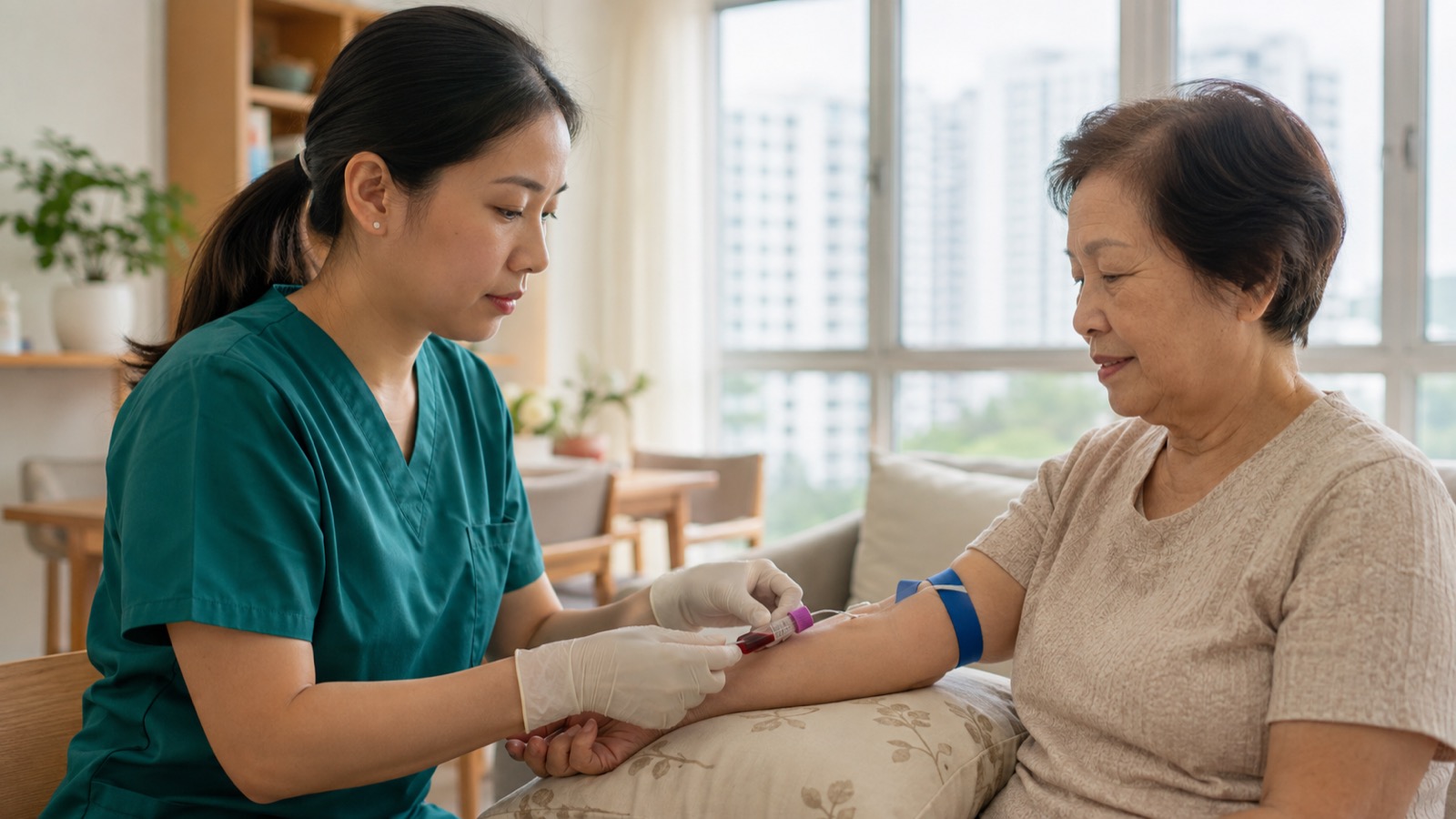
Blood test at home
People who find it hard to travel for a blood test — the frail, bedridden, or recently discharged — and anyone whose doctor has requested blood work that can be done at home.
homenurse.sgTube feeding support
People fed through a nasogastric (NG) or PEG tube at home, and the families learning to manage daily feeds, flushes and medications through the tube.
 homenurse.sg
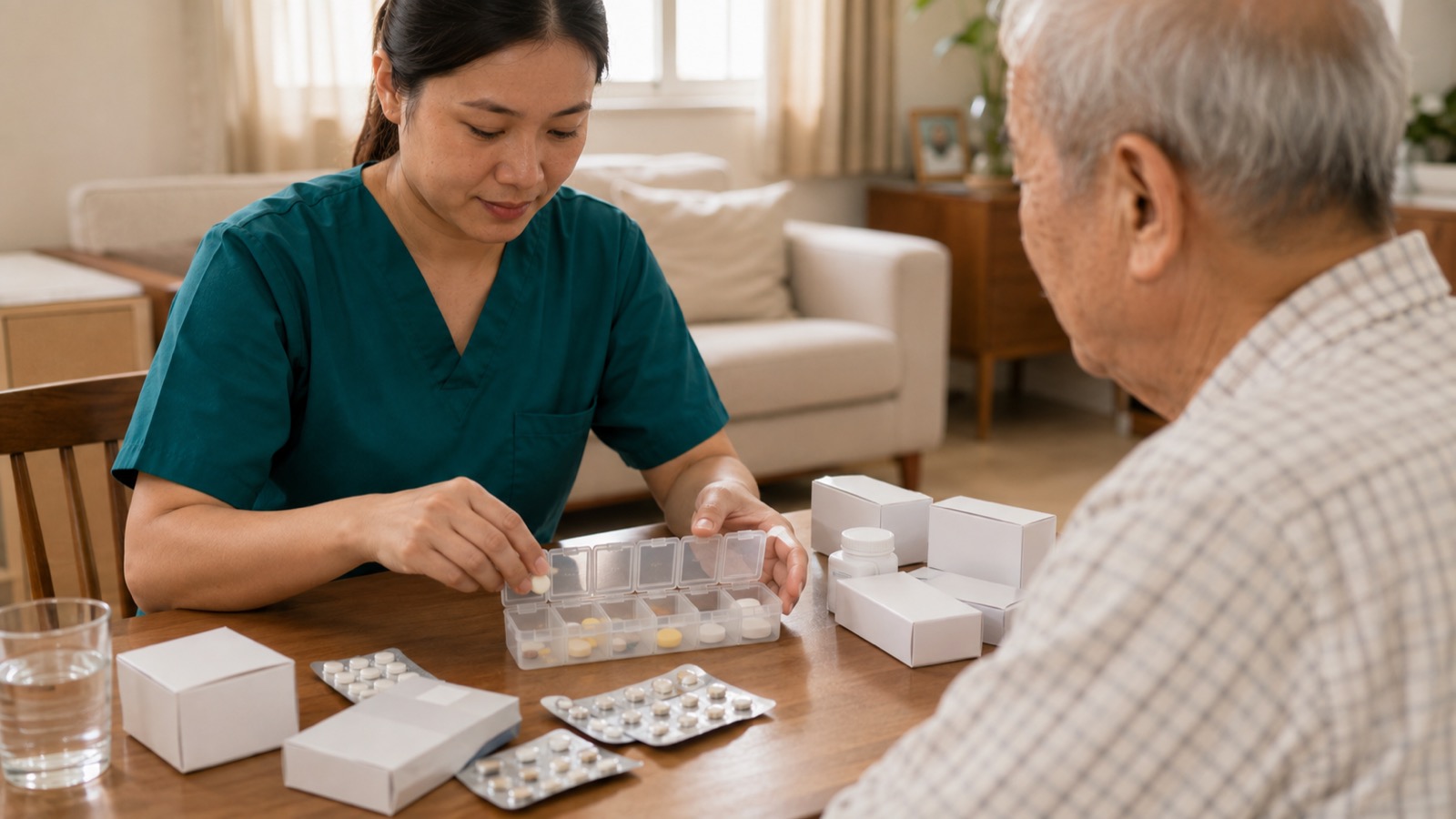
Medication management
People on many medications — especially the elderly or those recently discharged with a changed medication list — and families worried that doses are being missed, doubled, or muddled.
Not sure which visit you need?
Tell us the situation and we'll recommend the right care and confirm a price up front — no obligation.