What Good Wound Care at Home Looks Like
A wound that's dressed well heals faster and hurts less. Here's what a good nurse actually does at each visit — and what to watch between visits.
 homenurse.sg
General care information, not personal medical advice. Draft — pending clinical review.
What good care looks like
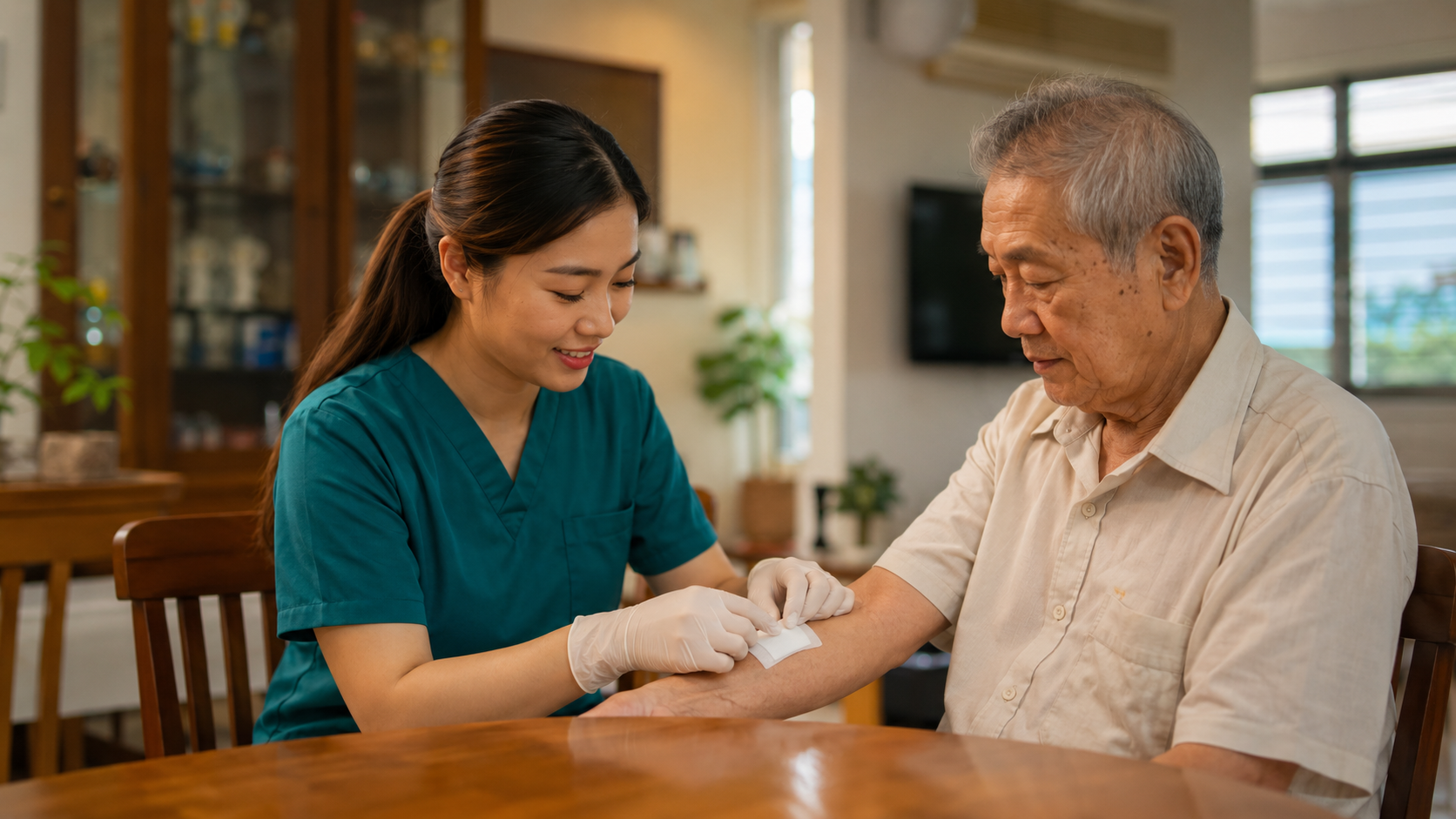
Good home nursing is more than completing a task. For wound care, it means a trained nurse who works cleanly and gently, checks how the patient is doing, keeps the family informed, and writes down what they found so the patient's doctor stays in the loop. The best sign of good care is that nothing is a surprise — the family knows what was done, what to watch for, and when the next visit is.
Clean hands, clean field
Infection is the biggest risk with any wound, so good wound care starts before the dressing is even opened. A nurse washes their hands, uses gloves, and keeps the cleaned wound and fresh dressing away from anything unsterile. Old dressings are removed gently, in the direction that pulls least on healing skin.
The right dressing for the wound
There is no single 'best' dressing. A dry graze, a weeping diabetic ulcer, and a surgical incision each need something different. A good nurse looks at the wound — how deep, how wet, whether there's dead tissue — and chooses a dressing that keeps it at the right moisture level to heal, then explains why.
Tracking healing over time
One visit is a snapshot; healing is a trend. Good care means measuring or photographing the wound, noting colour and discharge, and comparing against last time. If a wound is getting bigger or smellier instead of smaller, that's flagged early rather than discovered late.
When to call for help
- Spreading redness, warmth, or swelling around the wound
- Pus, or an offensive smell
- Fever, or the person feels generally unwell
- The wound is getting larger, deeper, or more painful
Need this done at home? Wound dressing at home — from S$90 per visit.