Home Safety and Fall Prevention for the Elderly
A fall can undo months of recovery in a second. Most are preventable with small, cheap changes — here's a room-by-room walkthrough.
 homenurse.sg
General care information, not personal medical advice. Draft — pending clinical review.
Why falls are worth taking seriously
For an older person, a single fall can mean a fracture, a hospital stay, and a lasting loss of confidence and independence. The good news is that most home falls are preventable, and the fixes are usually small and inexpensive — a bar here, a light there, a rug removed. It's some of the highest-value care you can give without any clinical training.
The bathroom first
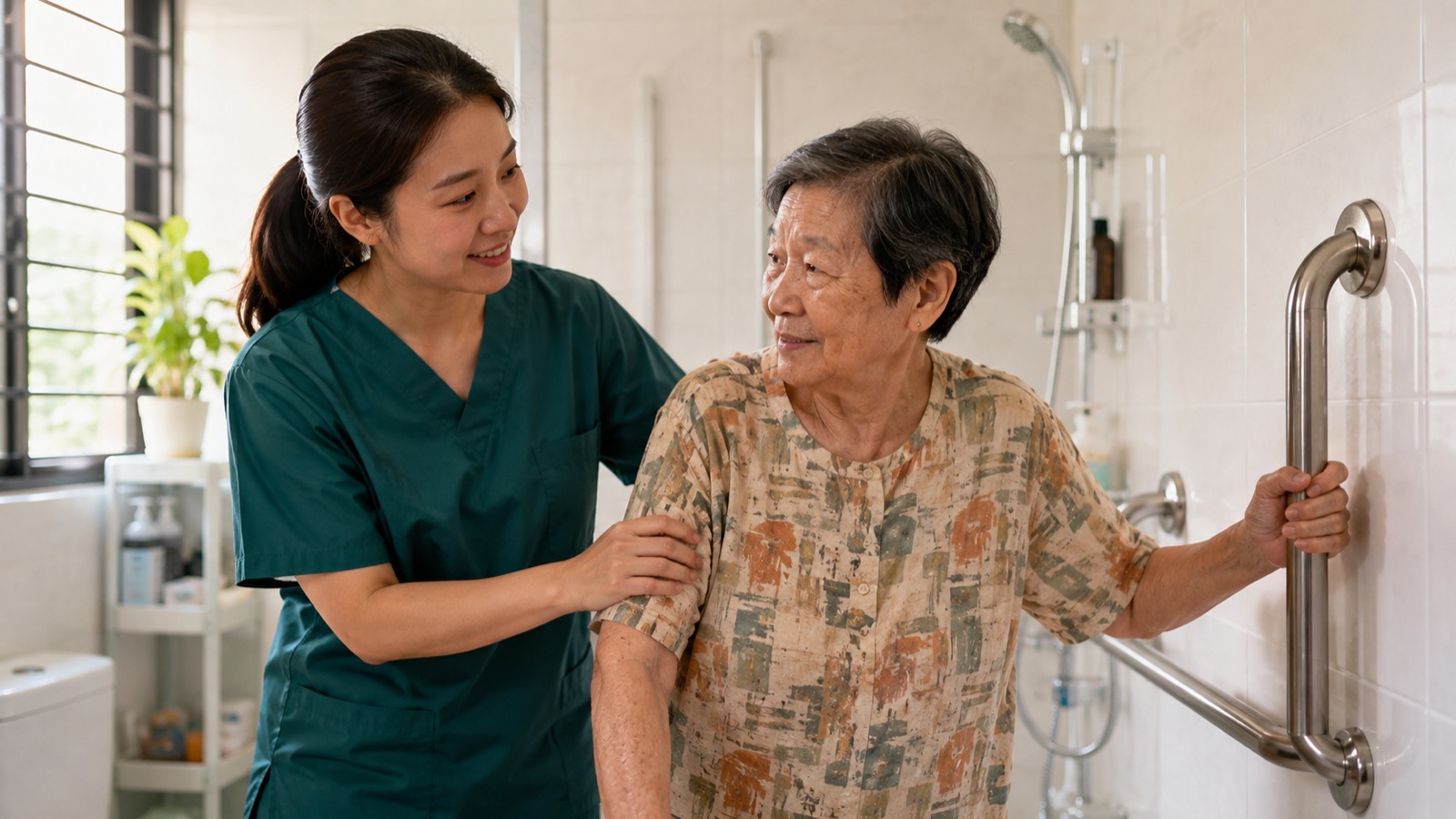
The bathroom is where most falls happen — wet, hard, and full of edges. It's the first place to make safe:
- Grab bars by the toilet and inside the shower — fixed to the wall, not suction cups
- A non-slip mat in the shower and by the basin
- A shower seat or bench so washing can be done sitting down
- A raised toilet seat if getting up and down is hard
Clear the floors and light the way
- Remove loose rugs, or tape them down — they're a leading trip hazard
- Move cords and clutter out of walking paths
- Keep a clear, unobstructed route from bed to bathroom
- Add night lights along that route, so a midnight trip isn't made in the dark
- Wipe up spills straight away, and watch for wet floors
The bedroom and the rest of the home
- Set the bed at a height where feet reach the floor easily
- Keep glasses, water, phone and a light within reach of the bed
- Put everyday items at waist height to avoid reaching up or bending down
- Fit handrails on both sides of any stairs, and mark the step edges
- Choose supportive, non-slip footwear over loose slippers or socks
Equipment as needs change
As mobility declines, some equipment earns its place: a commode by the bed, a hospital bed that adjusts, a pressure-relief mattress for someone spending long hours lying down. If you're not sure what's needed, a physiotherapist or occupational therapist can assess the home and recommend exactly what helps — often more useful than buying gadgets on guesswork.