Looking After a PICC Line at Home
A PICC line makes IV treatment at home possible — but it's a direct line to the bloodstream, so careful, clean handling is everything.
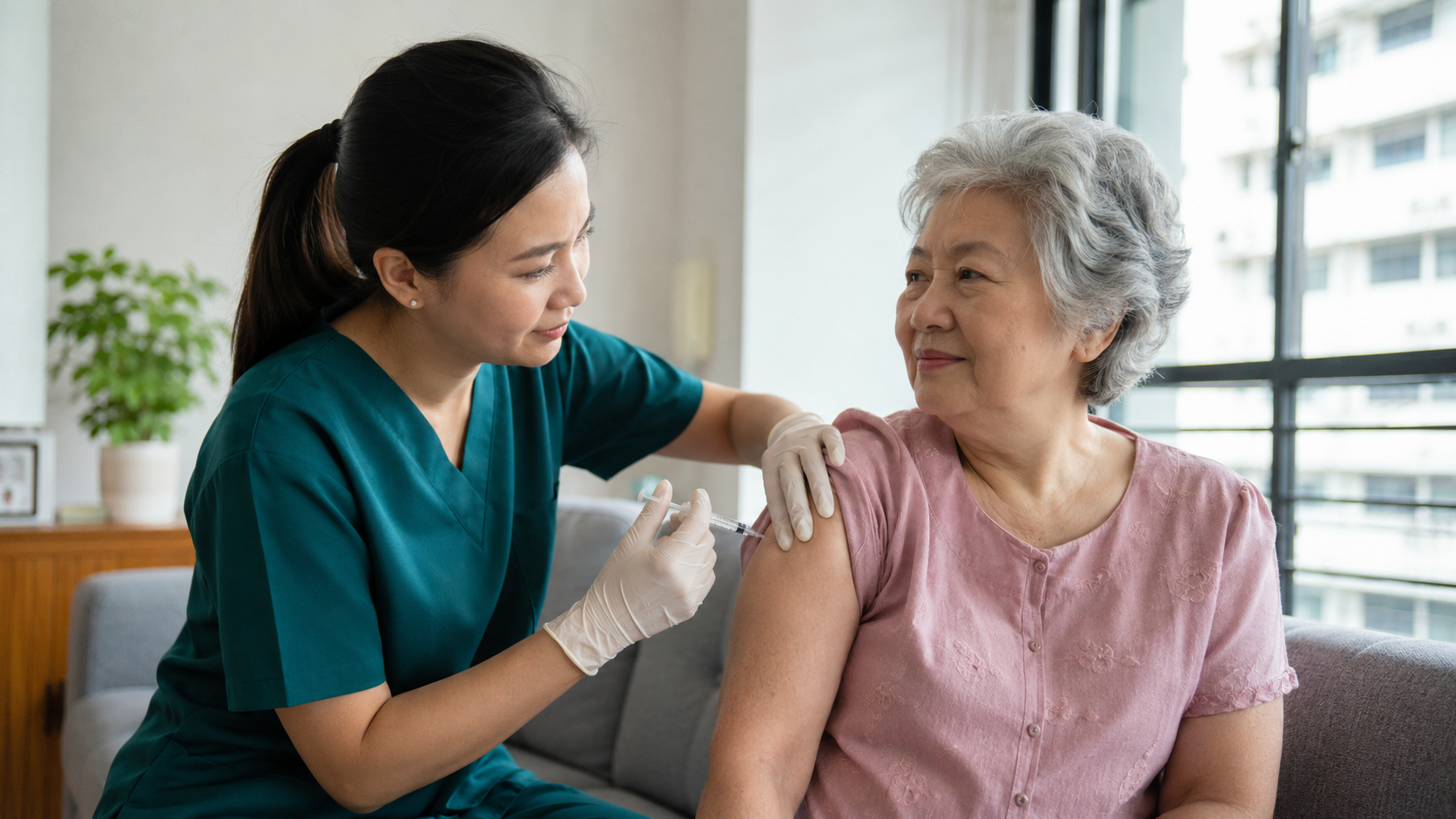
 homenurse.sg
General care information, not personal medical advice. Draft — pending clinical review.
What good care looks like
Good home nursing is more than completing a task. For PICC line care, it means a trained nurse who works cleanly and gently, checks how the patient is doing, keeps the family informed, and writes down what they found so the patient's doctor stays in the loop. The best sign of good care is that nothing is a surprise — the family knows what was done, what to watch for, and when the next visit is.
Clean, sterile dressing changes
Because a PICC line reaches a large vein near the heart, infection is serious. Good care means dressing changes done with a strict sterile technique, usually weekly, and a nurse who inspects the insertion site every time for any redness or swelling.
Flushing and protecting the line
Regular flushing keeps the line from clogging. Between visits, good care means protecting the line from getting wet or snagged, and knowing not to tug on it. A nurse shows the family how to keep it safe day to day.
When to call for help
- Redness, swelling, pain, or discharge at the insertion site
- Fever or chills — a line infection needs prompt attention
- The line is blocked, leaking, or has moved out
Need this done at home? PICC line care at home — from S$100 per visit.