Male Catheter Care at Home: Safe and Comfortable
Male catheterisation asks a little more of the nurse. Here's what safe, comfortable male catheter care at home involves.
 homenurse.sg
General care information, not personal medical advice. Draft — pending clinical review.
What good care looks like
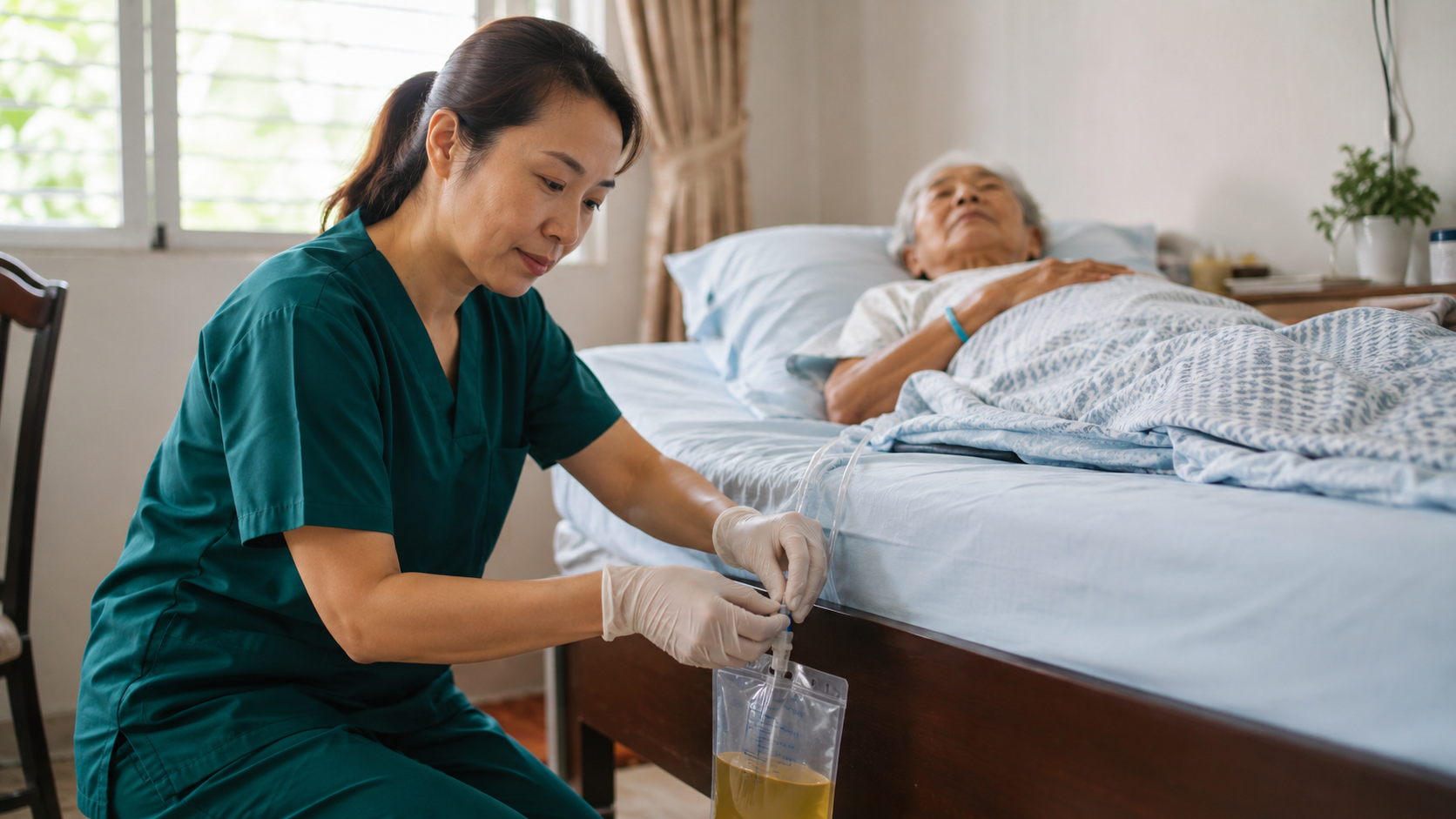
Good home nursing is more than completing a task. For male catheter care, it means a trained nurse who works cleanly and gently, checks how the patient is doing, keeps the family informed, and writes down what they found so the patient's doctor stays in the loop. The best sign of good care is that nothing is a surprise — the family knows what was done, what to watch for, and when the next visit is.
Why technique matters more
The male urethra is longer and more curved, so inserting or changing a catheter takes care and the right technique to avoid trauma. This is part of why some home providers decline male catheterisation. Good care means a nurse who is comfortable and experienced doing it gently at home.
Comfort and dignity
A calm, private, unhurried visit makes a real difference. Good nurses explain each step, protect the patient's dignity, and stop if there's significant pain — never forcing anything.
Everyday care between changes
The daily basics are the same as any indwelling catheter: clean hands, gentle hygiene, good drainage with the bag kept low, and watching for signs of infection or blockage.
When to call for help
- The catheter can't be passed, or no urine drains after a change
- Significant bleeding or severe pain
- Fever, chills, or cloudy, foul-smelling urine
Need this done at home? Male catheter change at home — from S$110 per visit.