Safe Injections at Home: What Good Practice Looks Like
A home injection should be quick and uneventful. Good practice is what keeps it that way — from checking the prescription to disposing of the needle.
 homenurse.sg
General care information, not personal medical advice. Draft — pending clinical review.
What good care looks like
Good home nursing is more than completing a task. For injections at home, it means a trained nurse who works cleanly and gently, checks how the patient is doing, keeps the family informed, and writes down what they found so the patient's doctor stays in the loop. The best sign of good care is that nothing is a surprise — the family knows what was done, what to watch for, and when the next visit is.
The right medication, the right dose
Good practice starts with confirming the prescription — the right medication, dose, and patient — before anything is drawn up. This simple check prevents the most serious errors.
Safe technique and observation
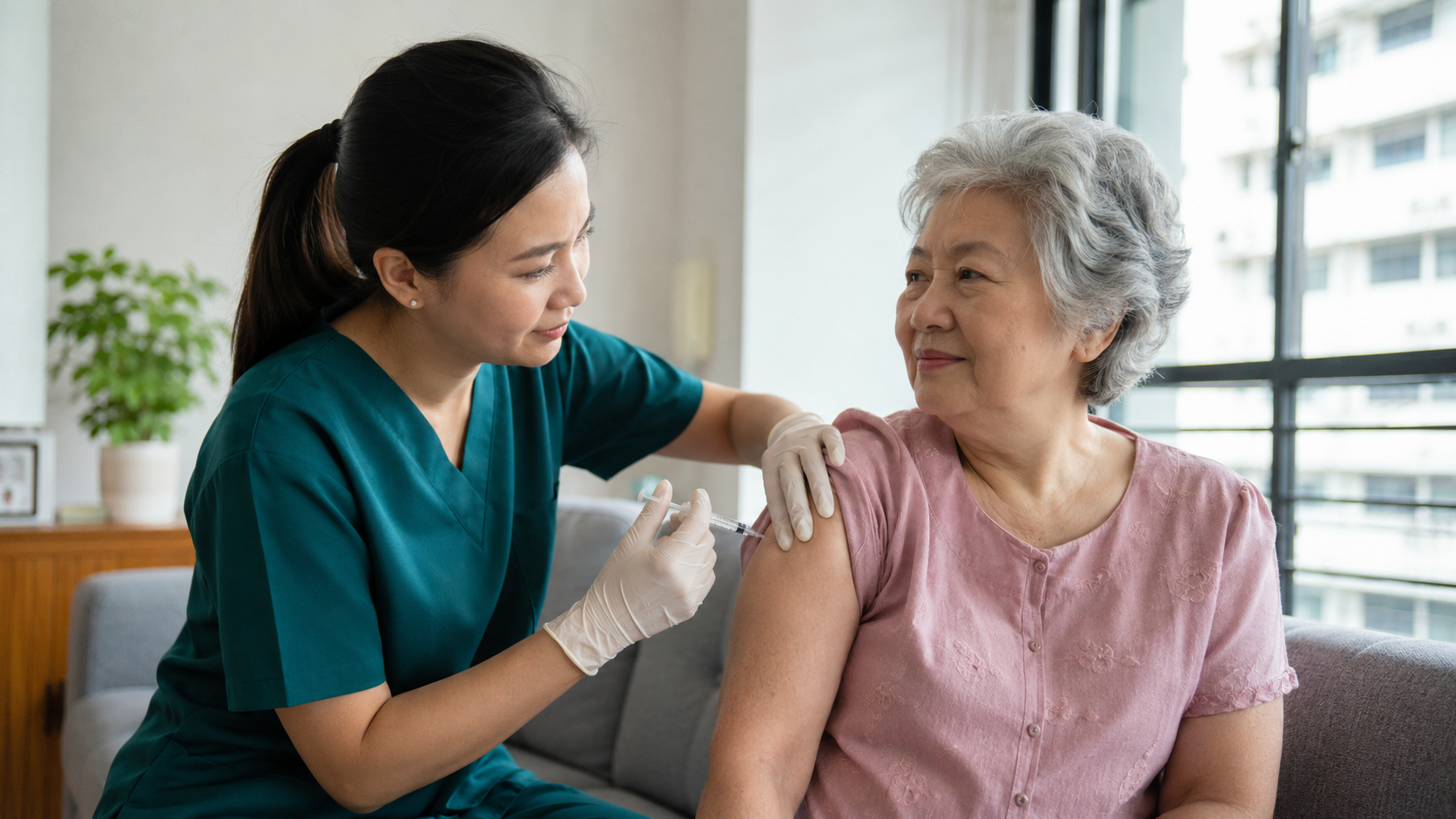
A nurse gives the injection using the correct site and technique, then watches the person briefly afterwards. Some medications can rarely cause reactions, so a good nurse doesn't just give the injection and leave immediately.
Safe sharps disposal
Used needles go straight into a proper sharps container — never a household bin. Good care includes advising the family on safe disposal so no one is hurt.
When to call for help
- Rash, swelling of the face or throat, or breathing difficulty after an injection — seek urgent help
- Severe pain, spreading redness, or swelling at the injection site
- Fever after the injection
Need this done at home? Injections at home at home — from S$90 per visit.